.jpeg)


.jpeg)


CNA Singapore 2024: A Bolder Studio for a New Era
The Brief
Major technical upgrades at their Singapore studio - including their first adoption of Unreal Engine and the installation of a Mr Robot programmable camera - created the opportunity for a bold evolution of what had come before. The brief was clear: build on the foundations of the 2020 design, but push the architecture, the scale, and the AR capabilities significantly further.
Lightwell provided both the design vision and the technical expertise that gave CNA the confidence to proceed with what was a substantial investment in their studio infrastructure.
Expanding the Space
The 2020 set had transformed a modest physical studio into a credible, contemporary news environment - but it remained, architecturally, a single-storey space. For the 2024 redesign, we proposed something more ambitious: extending the virtual environment vertically, masking out the studio's real ceiling and lighting grid entirely, and replacing it with a full virtual upper level. The result is a double-height atrium - a genuinely majestic space that bears little relationship to the physical room it originates from.
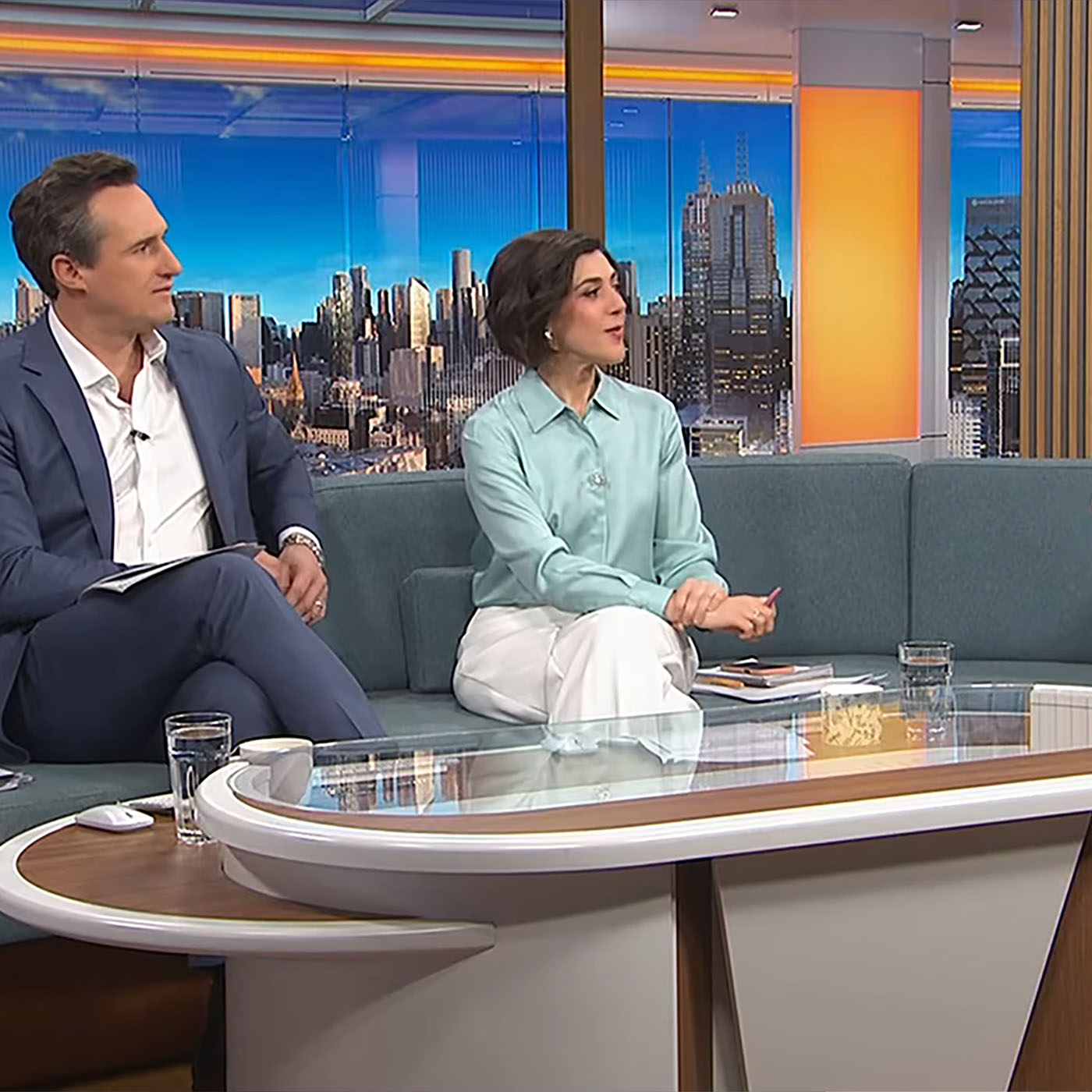
This vertical expansion was made possible by advanced masking techniques developed specifically for this project. By digitally removing the physical ceiling and extending the architecture upward, we gave the studio a sense of openness and civic scale that is rare in news broadcasting. The virtual structure frames sweeping views of the Singapore skyline, situating CNA firmly within its city while projecting an international presence.
Making Use of the Robotic Camera
The installation of CNA's robotic programmable camera system was a central driver of the redesign. A programmable camera demands a virtual environment that rewards movement - one with genuine depth, parallax, and multiple layers of interest at different distances. The 2024 design was built from the ground up to exploit this capability, with carefully considered spatial layering that responds convincingly to dynamic, pre-programmed camera moves. The result is a studio that feels alive on screen in a way that a static or manually operated camera setup simply could not achieve.
A Richer AR Framework
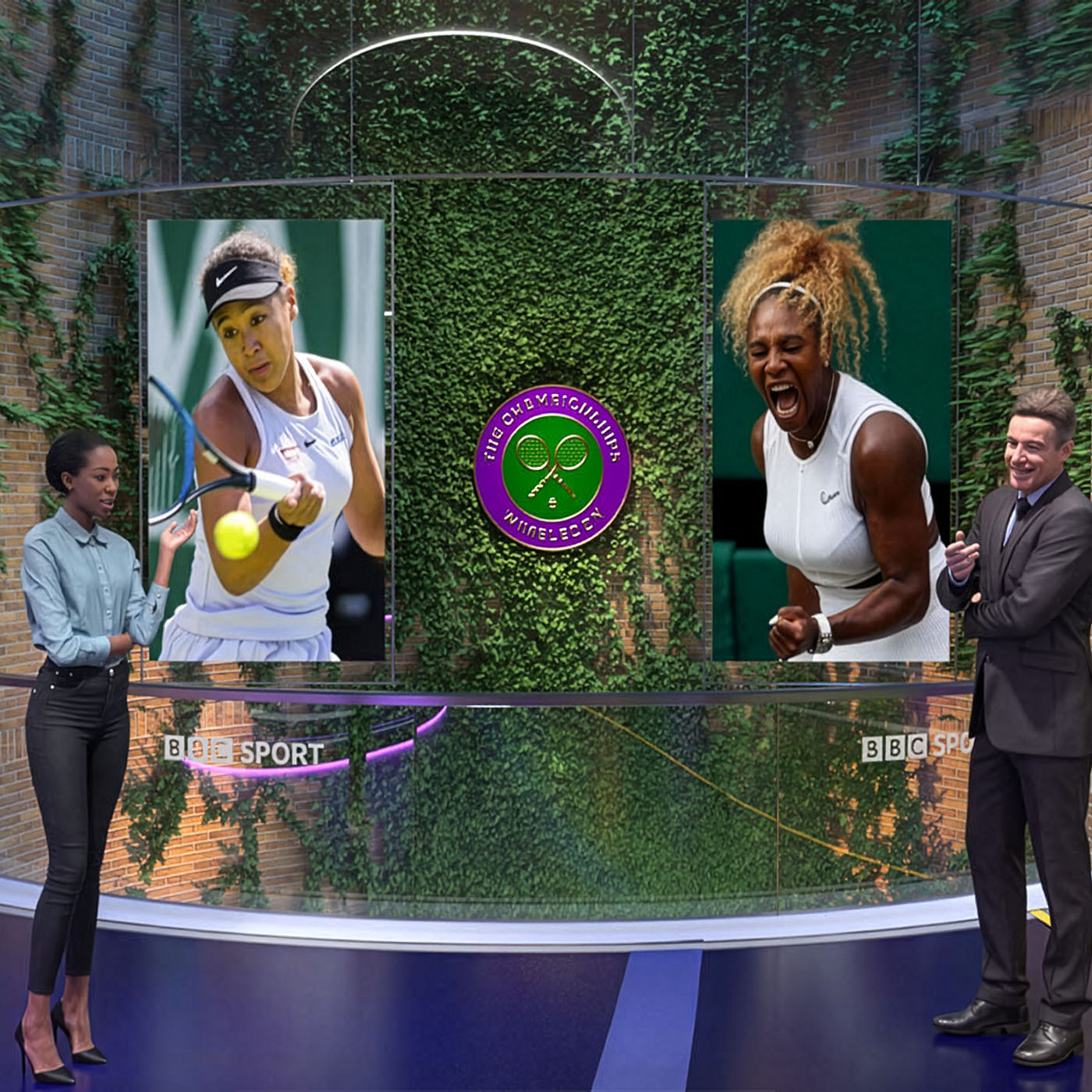
CNA wanted significantly expanded AR capability - more screen positions, more flexibility for data visualisations, remote presenter displays, and graphics. The glass floor grid, introduced as a defining element of the 2024 design, provides the answer. It creates an architectural ordering system across the mid-ground zone of the virtual set - a logical, visually coherent framework within which AR devices can be positioned, moved, and scaled without the studio feeling cluttered or arbitrary. Graphics and remote correspondents appear to inhabit the space naturally, integrated into the architecture rather than floating in front of it.
Time of Day and Lighting
Where the 2020 design offered day and night lighting states, the 2024 version introduces a fully graduated range - daylight, dusk, and evening - each calibrated to match both the physical studio lighting and the exterior conditions visible through the virtual windows. These transitions are not simply mood changes; they reinforce the rhythm of the news cycle and maintain visual consistency between presenters and their virtual environment across every bulletin of the day.
The Result
A news studio that represents a genuine step forward from its predecessor - more ambitious in scale, more technically sophisticated, and more flexible as a broadcast tool. It is also a project that illustrates something important about how Lightwell works: the value we bring is not only in the design itself, but in the technical confidence and creative clarity we give clients who are making significant investments in new broadcast technology. CNA trusted us with that in 2020. They trusted us again in 2024.
Client
Mediacorp/CNA
Design
Jim Mann, Lightwell
Realtime Engine
Unreal Engine 5.2
Studio Integration
CNA in-house team
Powered by
Viz 5
Previous design